
In this comprehensive exploration, we delve into the potential of household items – baking soda and vinegar – as a deterrent for common pests. By understanding their properties and conducting methodical experiments, we aim to evaluate their effectiveness in pest control.
Aiding our readers in making informed, cost-effective decisions, this article serves as a guide to those seeking alternative, DIY solutions to maintain a pest-free environment.
Join us on this investigative journey into the realm of homemade pest control.
Worried about pest activity on your property? Contact Nature Guard Pest & Lawn for professional and comprehensive services.
Key Takeaways
- Baking soda and vinegar, when combined, produce carbon dioxide gas and water.
- The carbon dioxide produced may potentially deter pests.
- The effectiveness of this strategy as a bug deterrent may vary depending on the species.
- There is a lack of substantial scientific evidence supporting the effectiveness of baking soda and vinegar as a bug repellent.
Understanding Baking Soda and Vinegar
The efficacy of baking soda and vinegar as a bug repellent hinges on the chemical properties of these two common household substances. Baking soda, or sodium bicarbonate, is a base, while vinegar, primarily composed of acetic acid, is an acid. When combined, they undergo a chemical reaction, producing carbon dioxide gas and water as by-products. This reaction is often leveraged for various household uses, including cleaning and deodorizing.
The carbon dioxide produced could potentially deter pests, as it might disrupt their respiratory processes. However, the effectiveness of this strategy may vary depending on the species and their sensitivity to such chemical changes. Therefore, understanding the fine balance between the acid-base interactions is instrumental for maximizing their potential as a natural bug deterrent.
Common Household Pests
While the effectiveness of baking soda and vinegar in repelling bugs hinges on the chemical properties of these substances, it is equally important to consider the specific types of common household pests that one might encounter.
Pest identification is a key step in pest control. It helps determine the best course of action, such as using natural repellents like baking soda and vinegar. Common household pests include cockroaches, ants, spiders, and fruit flies.
Each of these pests has unique characteristics and behaviors which influence their response to repellents. For instance, ants are highly attracted to sweet substances but can be repelled by vinegar.
Thus, understanding these pests and their behaviors can optimize the use of baking soda and vinegar as natural repellents.
DIY Pest Control Methods
Given the unique characteristics and behaviors of common household pests, it is crucial to explore DIY pest control methods using baking soda and vinegar. This combination can offer an effective and natural solution for repelling these unwanted guests. Baking soda and vinegar, when combined, create a fizzing reaction that is aversive to many pests, acting as natural repellents.
To utilize this method, mix equal parts of the substances in a spray bottle and apply it to areas where pests are prevalent. This method also serves as a form of pest prevention, disrupting the habitat and deterring future infestations.
It is a cost-effective, eco-friendly approach that leverages readily available household items, making it an ideal method for those committed to serving others and the environment.
Baking Soda and Vinegar Experiment
An experiment with baking soda and vinegar can provide further insight into their effectiveness as a DIY pest control method. Using a volcano model, one can observe the chemical reactions that occur when these two substances interact.
The acetic acid in the vinegar reacts with the sodium bicarbonate in the baking soda to produce carbon dioxide gas, causing an effervescence that mimics a volcanic eruption. This reaction may theoretically disorient or repel certain pests.
However, it is crucial to note that this potential repellent effect has not been thoroughly studied or verified in a scientific context. As such, while intriguing, the use of baking soda and vinegar as a pest control solution should be approached with caution and skepticism.
Evaluating the Results
Upon examining the results, it becomes clear that the effectiveness of using baking soda and vinegar as a bug repellent lacks substantial scientific evidence.
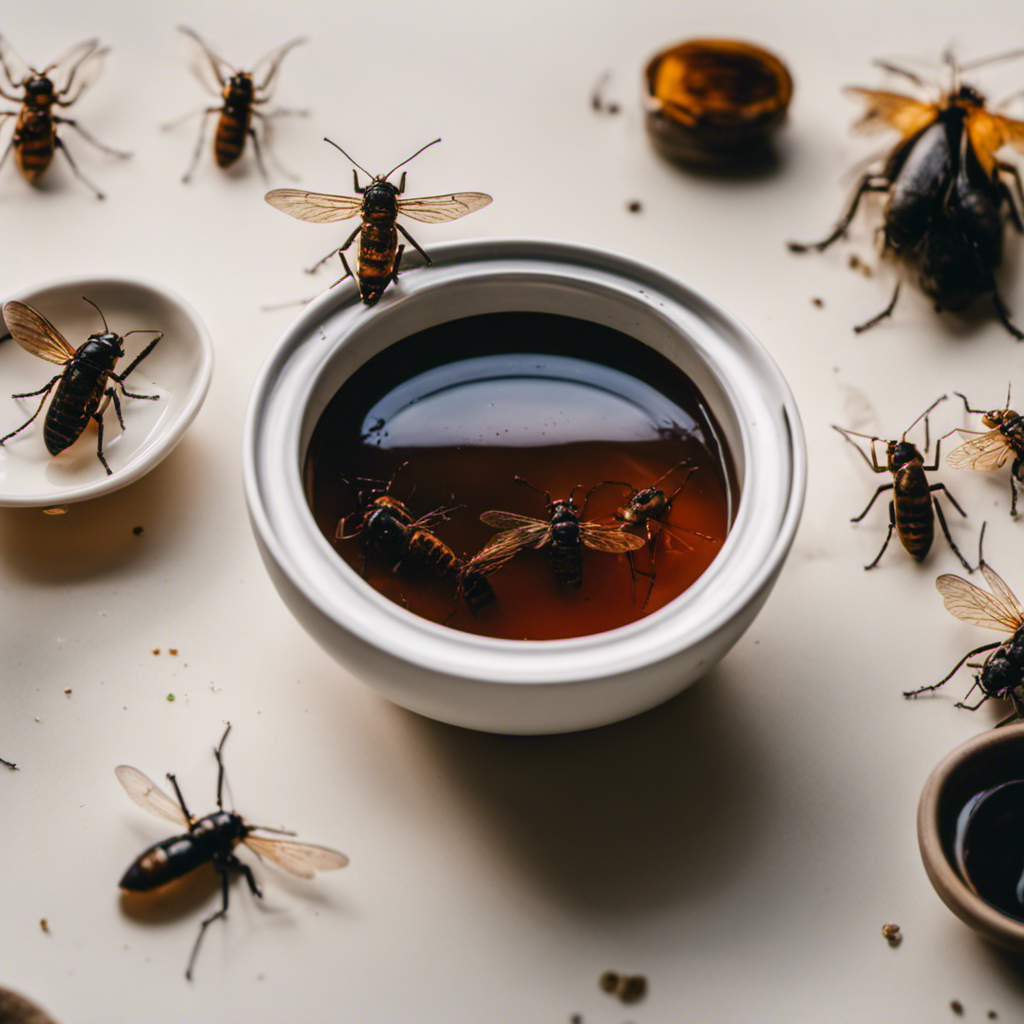
Pest reactions to this homemade remedy have been varied, with some insects showing signs of repulsion, while others remain unaffected.
The inconsistency of these reactions suggests that more rigorous, controlled studies are necessary to truly gauge the validity of this method.
Furthermore, the experiment validity itself may be questionable due to potential confounding variables such as insect species, environmental factors, and the concentration of the solution used.
Therefore, while baking soda and vinegar may deter some pests, it is not a reliable, scientifically supported solution for comprehensive pest control.
We must continue to seek out effective, evidence-based strategies to serve our communities better.
Contact Nature Guard Pest & Lawn Today!
Don’t let pests take control of your home! Let Nature Guard Pest & Lawn step in and provide you with top-notch pest control services you can trust. Proudly serving the local Tulsa community, we are ready to solve any pest problems you may encounter. Whether it’s in your home or office, we’re the local team you can rely upon. Contact us today or visit our website to book your appointment and ensure a pest-free environment for you and your family.