

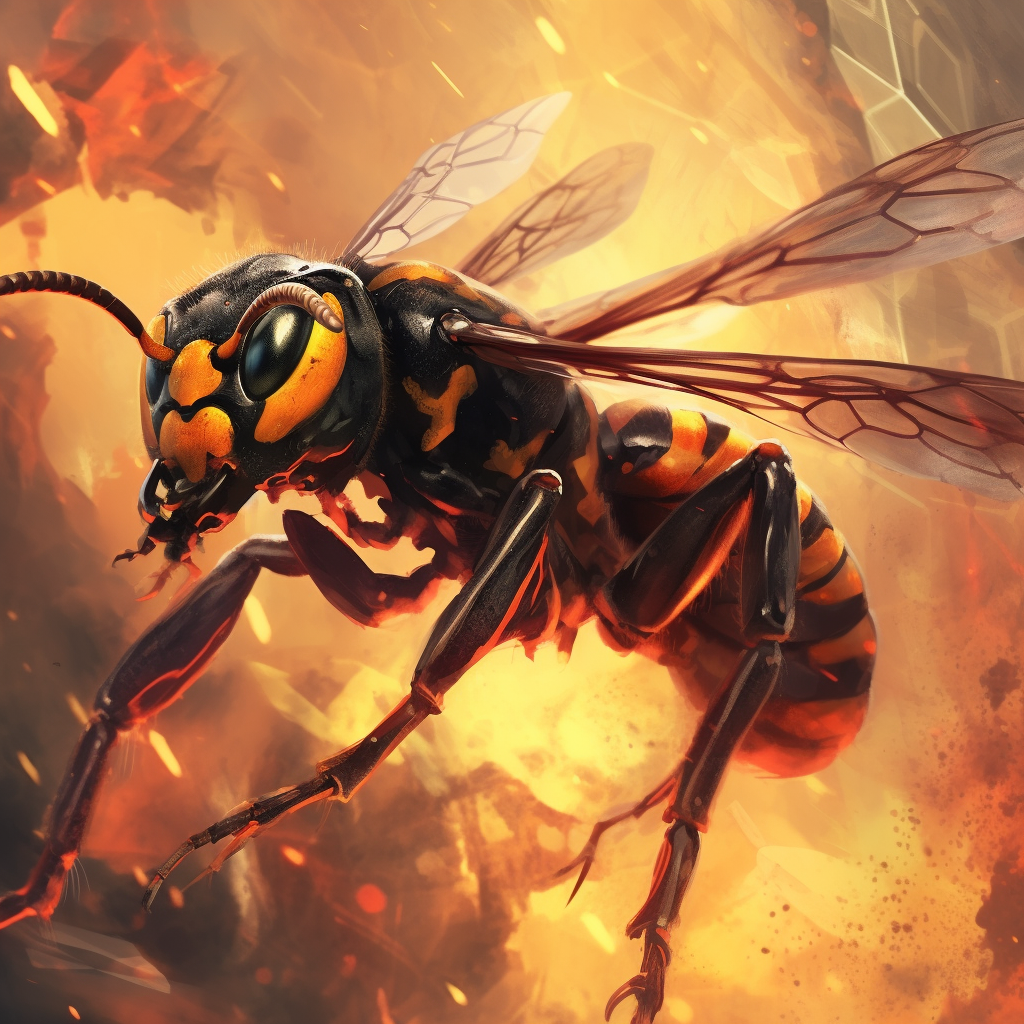
You’re relaxing in the yard when something the size of your thumb buzzes past your head. It looks like a hornet that skipped leg day at the gym. If you’ve spotted one of these massive wasps digging holes in your lawn, you’ve likely met a cicada killer, and despite the intimidating size, they’re not the threat most people assume.
What Cicada Killer Wasps Look Like
Cicada killers are among the largest wasps found in Oklahoma, often reaching one and a half to two inches long. Their size alone is what triggers most of the panic, since nothing that big buzzing around a patio feels harmless at first glance.
They have a black or reddish-brown body with yellow markings across the abdomen, similar in color pattern to a yellow jacket but much bigger. Their wings are amber-tinted, and their legs hang down noticeably during flight. Females are larger than males, which is unusual for most wasp species.
A few identifying features to watch for:
- Large size, often compared to a small hummingbird in flight
- Reddish-brown thorax with yellow bands on the abdomen
- Amber or smoky-colored wings
- Noticeably long legs that dangle while flying
Why Cicada Killers Dig Burrows in Your Lawn
Unlike wasps that build paper nests under eaves, cicada killers dig burrows straight into the ground. This alone can throw homeowners off, since ground activity looks a lot more alarming than a nest tucked under a roofline.
Female cicada killers dig tunnels that can run six to ten inches deep, often branching into several chambers. They prefer loose, well-drained soil, which is why sandy patches, bare spots in the lawn, and areas along sidewalks or patios tend to attract them.
Why the Burrow Location Matters
Burrow entrances usually look like small mounds of dirt with a hole in the center, sometimes mistaken for ant hills at first. High-traffic areas like play areas, walkways, and patios are the spots most likely to cause concern, simply because people and pets pass through more often.
Why Cicada Killers Carry Cicadas
The name isn’t just for show. Female cicada killers hunt cicadas, sting them to paralyze them, and drag the still-living cicada back to the burrow. Each chamber gets stocked with a paralyzed cicada, which becomes food for a single wasp larva once it hatches.
This hunting behavior explains a strange sight some homeowners report: a wasp struggling to fly while gripping something almost as big as itself. Watching what wasps eat and hunt gives a clearer picture of their role outdoors, and our guide on what wasps eat covers this in more detail across different species.
Do Cicada Killer Wasps Sting People?
This is the question most homeowners actually care about, and the answer offers some relief. Cicada killers are not aggressive toward people, even though their size suggests otherwise.
Female cicada killers can sting, but they rarely do unless physically grabbed or trapped against skin. Their sting is reserved almost entirely for paralyzing cicadas, not defending territory the way yellow jackets do. Male cicada killers cannot sting at all, despite often being the more visibly aggressive ones buzzing around and chasing off intruders near the burrow area.
A few points worth remembering:
- Females can sting but rarely do unless directly provoked
- Males cannot sting, even though they act territorial
- Stings from females are typically mild compared to other wasp species
- Cicada killers show little interest in humans or food at picnics
This behavior sets them apart from wasps that actively defend a shared colony, since cicada killers are solitary and have no group nest to protect.
Cicada Killers Versus Yellow Jackets
Confusing these two species is common, and the mix-up leads to a lot of unnecessary fear. Understanding the differences helps homeowners know which situation actually calls for caution.
Yellow jackets are smaller, more aggressive, and live in large social colonies that they defend as a group. A disturbed yellow jacket nest can send out dozens of wasps at once, and their stings often come in multiples. Cicada killers, on the other hand, are solitary. Each female digs and stocks her own burrow without coordinating with other wasps nearby.
Size is the easiest first clue. Cicada killers dwarf yellow jackets in comparison. Behavior is the second clue. Yellow jackets react fast to disturbance near their nest, while cicada killers mostly ignore people unless directly handled.
When Cicada Killers Are Active in Oklahoma
Cicada killer activity in Oklahoma typically ramps up from mid-summer through early fall, matching the seasonal appearance of cicadas themselves. Adult wasps emerge from the ground in July and remain active into September, with peak burrowing activity happening on warm, sunny days.
Once cooler weather arrives, adult activity drops off completely. The next generation stays underground as larvae through fall and winter, emerging as adults the following summer once conditions warm back up.
When Burrows Near Patios Call for Professional Attention
Most cicada killer activity doesn’t require any action beyond patience, since the wasps are more interested in cicadas than in people. Still, certain situations make professional treatment worth considering.
A few reasons homeowners choose to address cicada killer burrows include:
- Multiple burrows clustered in a high-traffic play area
- Burrows forming repeatedly in the same section of lawn each summer
- Household members with known wasp sting allergies
- Burrows located near entryways where interaction is harder to avoid
Since cicada killers dig into loose soil, treating the burrows directly is often more effective than trying to spray individual wasps in flight. Professional treatment can also address soil conditions that keep attracting new burrows year after year.
If you’re dealing with wasp nests elsewhere on the property too, our guide on wasp nest removal in Oklahoma covers safe removal approaches for more aggressive species. And if you’ve spotted a different type of solitary wasp altogether, our page on whether mud daubers sting in Oklahoma can help you tell the difference.
Living Alongside Cicada Killers
Cicada killer wasps look intimidating, but their size is mostly bark with very little bite. Understanding their solitary nature, their preference for cicadas over confrontation, and their seasonal patterns can turn a scary summer surprise into a much less stressful one.
For more pest identification tips and prevention resources, visit the Nature Guard knowledge hub or explore Nature Guard’s full range of services built for Oklahoma homes.