
Organic farmers face unique challenges when it comes to pest control. With a focus on sustainability and environmental stewardship, they must find effective methods that do not compromise the health of their crops or the surrounding ecosystem. Similarly, professional services like Nature Guard Pest & Lawn apply targeted, environmentally responsible strategies to manage pest issues effectively in residential and commercial settings.
This article explores the strategies and practices organic farmers use to manage pests, including natural methods, biological control efforts, and organic pesticides.
By understanding these approaches, farmers and individuals interested in sustainable agriculture can gain insights into how to protect their crops while minimizing negative impacts on the environment.
Key Takeaways
- Organic farmers use natural pest-prevention methods, such as soil management, companion planting, intercropping, and maintaining healthy soil.
- Crop rotation and diversification are important strategies used by organic farmers to disrupt pest life cycles, attract different pests, improve soil health, and minimize the need for chemical pesticides.
- Biological pest control is a sustainable, environmentally friendly alternative to synthetic pesticides, using beneficial insects and natural predators to prey on pests and promote biodiversity.
- Integrated Pest Management (IPM) is a holistic approach that combines various methods, including biological control, crop rotation, sanitation practices, and resistant plant varieties, to control pests in an environmentally friendly manner and reduce reliance on synthetic pesticides while preserving ecosystem balance.
Natural Pest Prevention Methods
Natural pest-prevention methods are crucial to organic farmers’ pest control strategies.
One key practice is soil management. Organic farmers understand the importance of healthy soil for various reasons. They focus on building soil fertility through composting, cover cropping, and crop rotation. These practices not only improve soil health but also enhance its resistance to pests and diseases.
Additionally, organic farmers utilize companion planting techniques. They strategically plant certain crops together to maximize their pest control abilities. For example, planting marigolds alongside tomatoes can deter pests like nematodes. Similarly, intercropping certain plants can confuse insects and reduce their ability to locate their target crops.
Crop Rotation and Diversification
Crop rotation and diversification are effective strategies used by organic farmers to control pests and maintain the health of their crops. These practices involve alternating the types of crops grown in a specific area over time and cultivating a variety of crops simultaneously.
By rotating crops, farmers can disrupt the life cycles of pests and reduce their populations, as different crops attract different pests. Additionally, diversifying crops cultivates a healthier soil environment. Some crops naturally improve soil health by fixing nitrogen or increasing organic matter. Others release compounds that repel or deter pests.
Organic farmers also prioritize planting pest-resistant varieties, which are naturally more resilient to common pests and diseases. This combination of crop rotation and diversification helps ensure the long-term sustainability and productivity of organic farming while minimizing the need for chemical pesticides.
Biological Pest Control
Utilizing beneficial insects and organisms, as well as implementing natural predators, is a key strategy in biological pest control for organic farmers. Instead of relying on synthetic pesticides, biological control methods can be used to manage pests in a sustainable and environmentally friendly way.
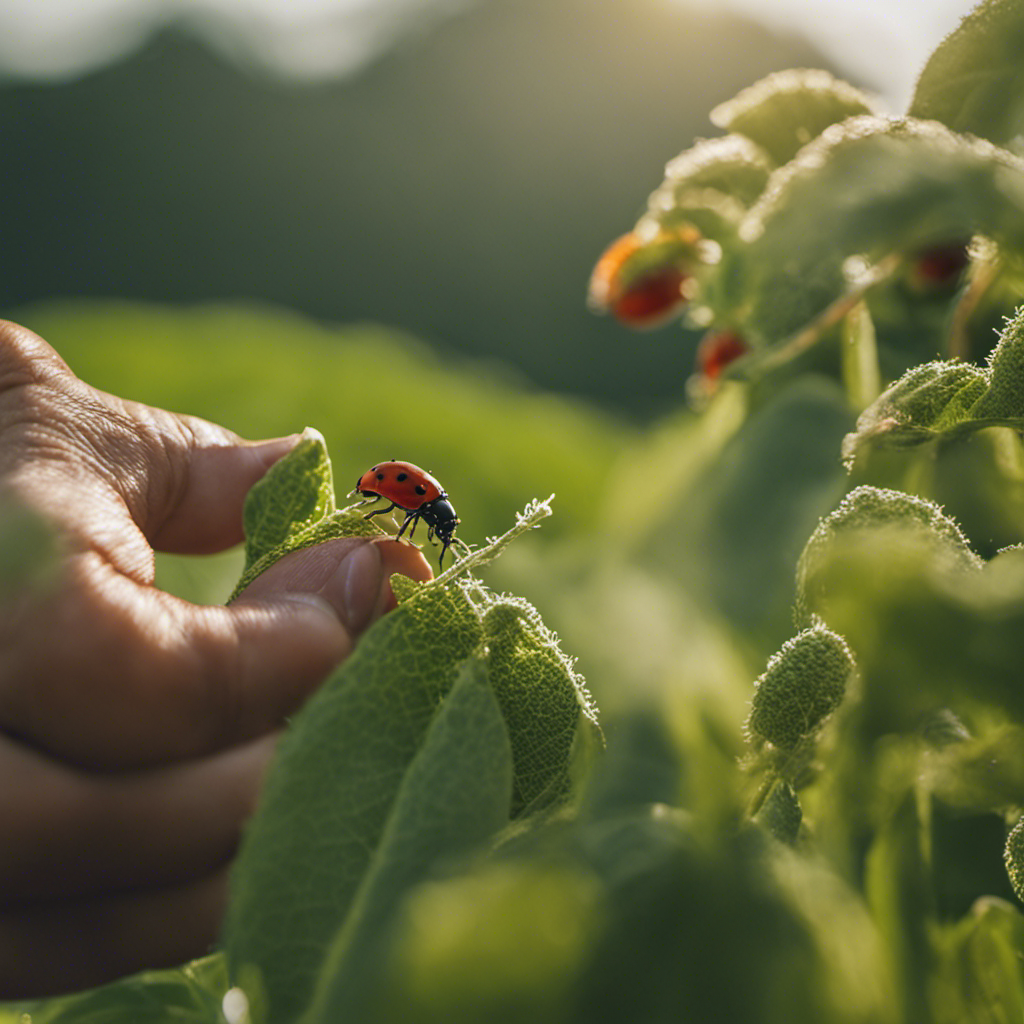
These methods involve introducing beneficial insects like ladybugs, lacewings, and parasitic wasps, which prey on pests such as aphids and caterpillars. Additionally, organic farmers encourage biodiversity by creating habitats that attract natural predators like birds and bats.
Another approach to biological pest control is the use of pest-resistant crops. These crops are genetically modified to produce toxins that are harmful to specific pests, reducing the need for chemical pesticides.
Integrated Pest Management (IPM)
One effective approach organic farmers adopt for pest control is integrated pest management (IPM).
IPM is a holistic, sustainable approach that combines multiple methods to control pests in an environmentally friendly manner.
It involves using biological control methods, such as introducing beneficial insects or predators to naturally control pest populations.
Additionally, IPM focuses on preventive measures, such as crop rotation, sanitation practices, and the use of resistant plant varieties, to minimize pest infestations.
By integrating these different strategies, organic farmers can effectively manage pests while minimizing the use of synthetic pesticides.
This approach promotes long-term sustainability by reducing the reliance on chemical inputs and preserving the natural balance of ecosystems.
Natural Predators and Beneficial Insects
The use of natural predators and beneficial insects is a common practice among organic farmers. They understand the importance of maintaining a balanced ecosystem and utilize natural pest control methods to manage their crops effectively.
Natural predators such as ladybugs, lacewings, and spiders are introduced into the fields to prey on harmful insects, reducing their population naturally. Additionally, beneficial insects like bees and butterflies play a vital role in pollination, ensuring healthy crop growth.
Organic Pesticides and Sprays
By employing natural substances and sustainable practices, organic farmers control pests with organic pesticides and sprays. These organic pest control methods are eco-friendly alternatives to conventional chemical-based pesticides.
Instead of relying on synthetic chemicals, organic farmers utilize naturally occurring substances, such as plant extracts, essential oils, and beneficial bacteria, to combat pests. These organic pesticides and sprays target specific pests while minimizing harm to beneficial insects and the environment. They break down quickly, leaving behind no harmful residue.
Other natural methods are also commonly used to deter pests, such as crop rotation, intercropping, and habitat manipulation.
Frequently Asked Questions
Can Organic Farmers Use Synthetic Pesticides if They Face a Severe Pest Infestation?
Farmers facing severe infestations may use synthetic pesticides as a last resort. However, they prioritize using synthetic pesticide alternatives and organic pest control methods, such as crop rotation, biological control, and the use of beneficial insects.
What Are Some Common Challenges Faced by Organic Farmers When Implementing Integrated Pest Management Practices?
Organic farmers face challenges when implementing integrated pest management practices, including limited options, higher labor demands, and the risk of yield losses. However, solutions such as crop rotation, the introduction of beneficial insects, and the use of trap crops can mitigate these challenges.
How Do Organic Farmers Attract and Maintain Populations of Natural Predators and Beneficial Insects on Their Farms?
Various methods are used to attract and maintain populations of natural predators and beneficial insects on farms. By creating suitable habitats, using companion planting, and implementing crop rotation, they enhance biodiversity and promote natural pest control methods.
Are There Any Specific Organic Pesticides and Sprays That Are More Effective Against Certain Pests Compared to Others?
Organic pesticide alternatives can be more effective against certain pests compared to synthetic pesticides. Factors such as pest type, environmental impact, and target specificity influence the choice of organic pesticides in organic farming.
Can Organic Farmers Achieve the Same Level of Pest Control Using Organic Methods as Conventional Farmers and Traditional Methods?
Organic farmers can achieve effective pest control using organic methods alone. While conventional farmers may rely on synthetic pesticides, organic farmers employ various approaches, such as crop rotation, natural predators, and natural methods, to control pests without compromising environmental and consumer health.
Contact Nature Guard Today!
Are you tired of unwanted pests in your home or office? It’s time to reclaim your space with Nature Guard, your leading pest control provider. Serving the Tulsa area, we provide fast, effective, and environmentally friendly solutions. Contact us today or visit our website to learn more about our services and schedule your appointment.