

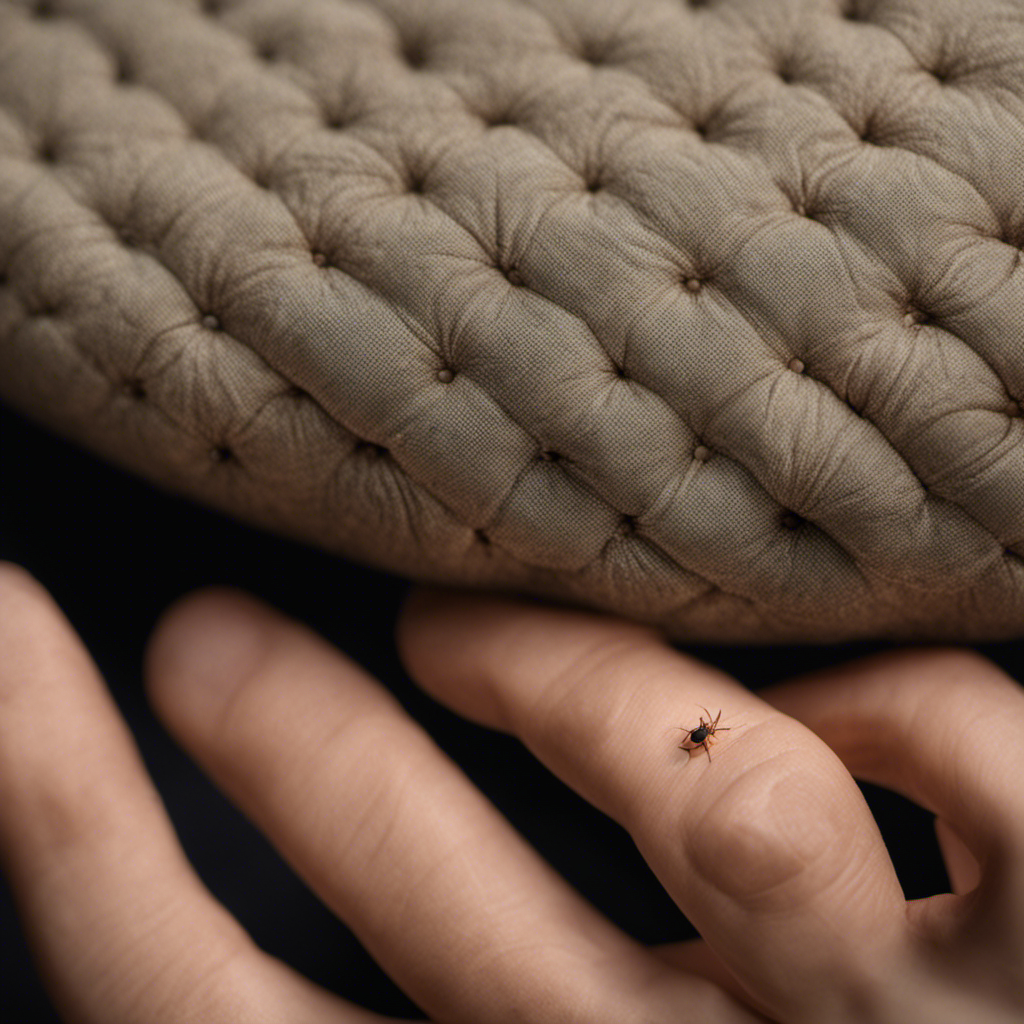
Unidentified bites can cause discomfort and concern. This article aims to help you decipher which common indoor pests might be the culprits.
From the elusive bed bugs to the pet-hating fleas, invisible dust mites, and carpet beetles, we delve into the identifying traits and habits of these nuisances.
Our goal is to equip you with the knowledge needed to effectively address and resolve your pest issue, ensuring a safer, bite-free environment.
Key Takeaways
- Accurate identification of common indoor pests is crucial for determining the cause of unexplained bites.
- Spider infestations typically occur in hidden, undisturbed areas such as corners, behind furniture, or in basements.
- Ant invasions usually start in search of food, and certain species can cause minor skin irritation through biting.
- Regular inspection of furniture, especially in hidden corners and crevices, is crucial for preventing bed bug infestations.
Identifying Common Indoor Pests
One must be able to accurately identify common indoor pests to determine the cause of unexplained bites while resting on their couch. Unwanted intruders such as spiders and ants can create an infestation that leads to discomfort and health risks.
Spider infestations typically occur in hidden, undisturbed areas such as corners, behind furniture, or in basements. They can bite when they feel threatened, leaving itchy, red marks.
An ant invasion, on the other hand, usually begins in search of food. While most ants don’t bite, certain species can, causing minor skin irritation.
Understanding these pests’ behaviors and identifying signs of their presence are the first steps in providing compassionate service to those affected.
The Sneaky World of Bed Bugs
Bed bugs, infamous for their stealthy and intrusive nature, pose a significant challenge to homeowners due to their tendency to bite and inhabit areas like couches. They are difficult to detect and eradicate, making bed bug prevention essential.
Regular inspection of furniture, especially in hidden corners and crevices, is crucial to prevent a full-blown infestation. Vacuuming, hot water laundering, and heat treatment of belongings can also deter these pests.
Infestation signs include unexplained bites, blood stains, and fecal spots on linens, as well as an off-putting sweet, musty odor.
The knowledge and application of these prevention strategies can help safeguard your home from the sneaky world of bed bugs, enhancing your ability to serve yourself and others by maintaining a pest-free environment.
Fleas: Your Pet’s Worst Enemy
Navigating the world of flea infestations can be particularly challenging, especially when your beloved pets are involved. Understanding the flea lifecycle is essential to tackle the problem.
Fleas, small wingless insects, have four stages: egg, larva, pupa, and adult. After feeding on an animal’s blood, female fleas lay eggs that eventually develop into blood-sucking adults. This cycle can perpetuate infestations, making fleas a relentless enemy to pets.
To protect your pet, consider natural repellents. Certain essential oils like lavender and peppermint can deter fleas. Keep in mind, though, these oils should be used cautiously, as some can be toxic to pets. Always consult a vet before application.
Knowledge and prevention are key in fighting against these persistent pests.
Dust Mites: Invisible But Irritating
Dust mites, microscopic creatures that thrive in warm, humid environments, are another common yet unseen culprit responsible for indoor bites and skin irritations. These tiny pests feed on dead skin cells, making your couch an ideal habitat. Mite allergies are prevalent, as their droppings and carcasses can trigger allergic reactions, including itchy skin and respiratory issues.
With regards to Mite Prevention, regular cleaning of your couch, including vacuuming and steam cleaning, can help reduce their population. Use of allergen-proof covers on cushions can also limit their spread. Controlling humidity levels in your home is crucial, as mites struggle to survive in dry conditions. By taking these preventive measures, you can make your couch a less inviting environment for dust mites.
Dealing With Carpet Beetles
While dust mites can be a common nuisance, another potential source of discomfort can be carpet beetles, which require a different approach for effective management. To prevent a beetle infestation, it is essential to maintain a clean environment, vacuum frequently, and inspect any second-hand furniture or clothing for signs of these pests.
Natural beetle remedies can also be employed; these include the use of diatomaceous earth, a non-toxic powder that can be spread across areas where beetles are found. This powder can dehydrate and kill the beetles, interrupting their lifecycle.
Cedar oil is another natural remedy, as it can repel and kill carpet beetles, offering a safe and effective solution.